After nearly 20 years in planning, the first detailed plan for the Hundipea district has been given the green light (formally adopted) by the Tallinn City Council. This marks an important step towards turning a long-envisioned development into reality. It also means that a long-closed industrial waterfront area can gradually open up to people and grow into a pleasant, easy-to-live-in neighbourhood over time.
The adoption of the detailed plan means that the city considers the proposed solution suitable in principle, and the plan can move forward to the next stage. This allows work on bringing Hundipea to life to continue.
From an industrial area to a new neighbourhood
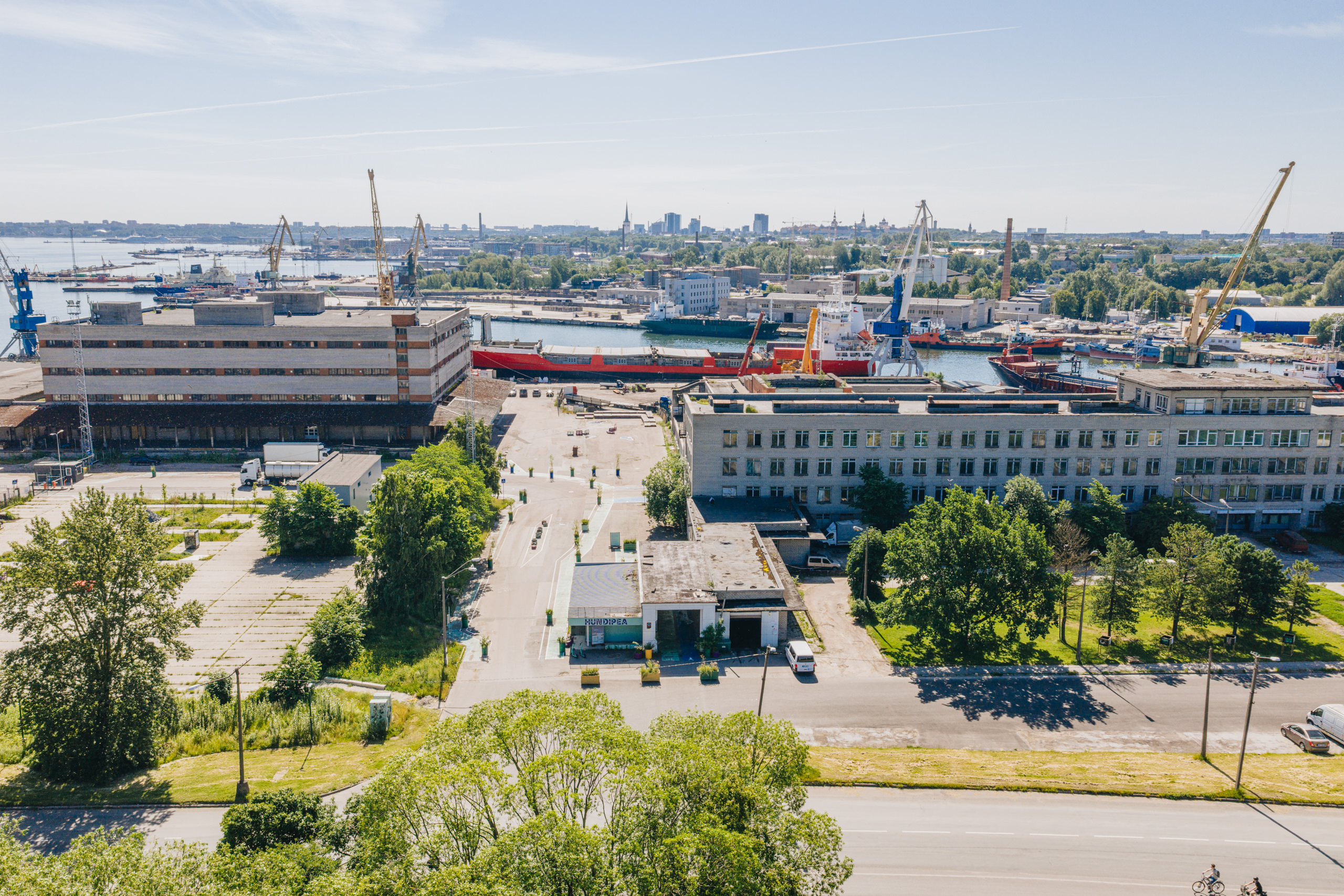
Hundipea is a former industrial port area located on the Paljassaare peninsula in Northern Tallinn. The development area covers approximately 42 hectares.
In the future, it will gradually grow into a new neighbourhood where around 6,000 people could live, and a similar number could work. However, Hundipea will not emerge all at once – it will develop step by step over several decades and through multiple detailed plans.
Our goal is to transform the former industrial site into a vibrant and diverse neighbourhood. The area will include homes, workplaces, services and public space that together create an urban environment that works well in everyday life. Hundipea is not planned as a collection of individual plots or isolated projects, but as a cohesive neighbourhood that evolves over time.
For residents, this will bring several important changes. As Hundipea develops, around three kilometres of previously closed waterfront will gradually open up. A new local centre will emerge in Northern Tallinn, bringing new jobs, everyday services, places to spend free time and educational opportunities. For example, the first kindergarten is already planned as part of the first development phase.
Mobility and connections are also a key focus in planning Hundipea. The aim is to ensure that the new neighbourhood is well connected to the rest of the city and supports a variety of ways of getting around – walking, cycling, public transport and car use.
You can read more about Hundipea’s future plans here: hundipea.ee/en/future
What a detailed plan defines – and what it doesn’t
A detailed plan is a decision by the local authority that defines land use and building conditions for a specific area: where and how much can be built, and where streets, green areas, utilities and other necessary infrastructure will be located.
For example, the plan sets out plot divisions and building rights – what each plot can be used for, and what volume and height of buildings can be developed. It also defines building density, traffic principles and the share of green space.
At the same time, a detailed plan does not determine the exact architecture of buildings, materials, or the detailed design of public space and landscape architecture. While it sets the locations of streets, squares and promenades, their precise design will be developed later through architectural and landscape architecture competitions and the design process.
This is why the visualisations published alongside the plan are illustrative – they show building volumes and street layouts, but do not represent final architectural or public space solutions.
In simple terms, a detailed plan does not design the city in full detail, but creates a framework for how the area can take shape over time.
What happens next?
The adoption of the detailed plan does not yet mean that construction will begin. It means that the city considers the proposed solution appropriate in principle, and the plan can move to the next stage.
Next, the local authority will put the plan on public display, where everyone has the opportunity to review it and provide feedback. The public display lasts at least 30 days and is followed by discussions. If necessary, adjustments are made to the plan.
Only after that can the city formally approve the detailed plan. Approval means the green light to begin construction.
In addition to the formal process, we also welcome ongoing questions, thoughts and feedback – both now and before and after the public display.
When will anything be completed?
Even after the detailed plan is approved, several more years are typically needed for design work, coordination and preparatory activities. If everything proceeds as planned, we hope to begin the first construction works around 2028.
At the same time, this does not mean that life at Hundipea will only begin then. Already today, the area hosts several tenants, events take place and parts of the public space are open to residents. The area will continue to evolve step by step.
An important milestone
Although the detailed plan getting the green light does not yet mark the start of construction, it is an important milestone for Hundipea.
It means that after a long preparation period and patient waiting, we can move on to the next steps and continue working towards transforming today’s industrial port area into a new seaside neighbourhood over time.